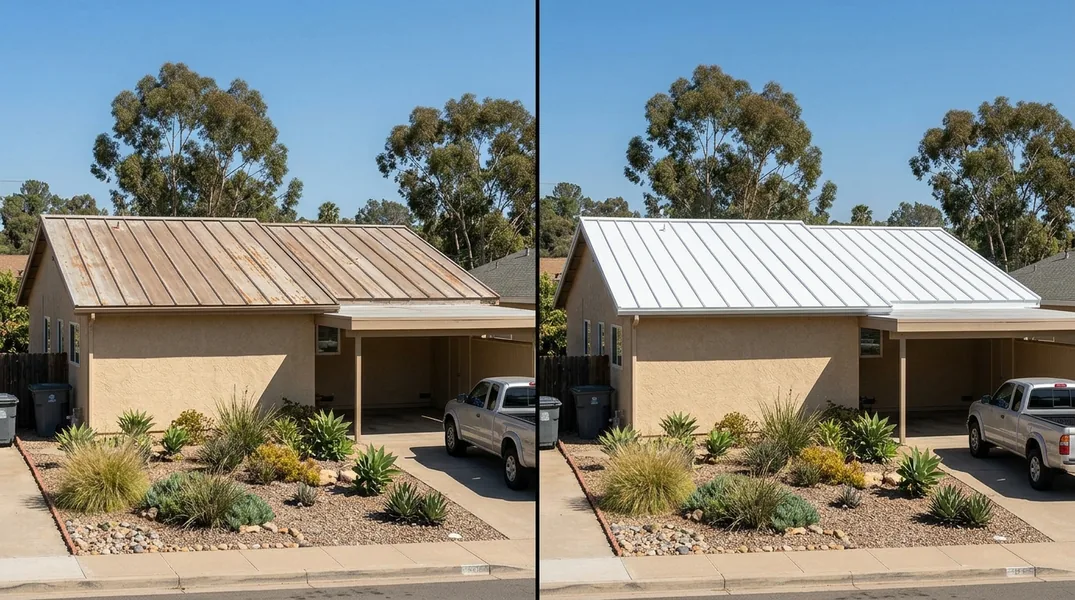
Why North County Homeowners Are Rethinking Their Roofs
If you live in or around Oceanside, you already know the rhythm of fire season. The Santa Ana winds pick up, the hills turn brown, and Cal Fire issues red flag warnings that can last for days. For decades, homeowners in this corridor accepted asphalt shingles as the default choice, but that calculus is changing fast. A class a fire rated roof is no longer a premium upgrade for the wealthy few; it is becoming a baseline expectation for anyone living in wildfire country.
The reason is simple. Embers, not flames, destroy most homes during a wildfire. Wind-driven embers can travel miles ahead of a fire front and land in roof valleys, gutters, and vents. Asphalt shingles can ignite when enough embers accumulate, and older, dried-out shingles are especially vulnerable. Metal roofing removes that fuel source entirely. When you combine a metal roof wildfire rating with proper attic ventilation and ember-resistant detailing, you dramatically reduce the chance that your home becomes one of the statistics.
What Class A Fire Rated Roofing Actually Means
The Class A rating is the highest fire resistance classification under ASTM E108, the standard test used for roof coverings in the United States. It measures how well a roof assembly resists external fire exposure, including flame spread and ember penetration. For fire resistant roofing in California, this matters because the California Building Code and Chapter 7A of the residential code require Class A roof assemblies in designated Wildland Urban Interface zones. Many parts of San Diego County, including neighborhoods in Vista and San Marcos, fall into these zones.
Here is the nuance most homeowners miss: the Class A rating applies to the entire roof assembly, not just the metal panels. That means the underlayment, decking, and flashing all matter. A standing seam metal roof installed over a non-combustible underlayment on solid decking earns its Class A rating as a system. If a contractor skips the right underlayment or cuts corners on flashing, the rating can be compromised. When you request a free estimate, ask specifically how the assembly achieves its Class A designation and request documentation.
Wildland Urban Interface Roof Requirements in Oceanside
The wildland urban interface roof standards are strict for good reason. Chapter 7A requires roof coverings to resist fire from the outside, but it also addresses roof valleys, eaves, and vents. Metal roofs perform exceptionally well here because the panels themselves are noncombustible, and standing seam profiles eliminate the exposed fasteners and seams where embers can lodge. A Standing Seam Metal Roofing system also allows for clean detailing at ridges and valleys, which reduces the small gaps that can trap burning debris.
Ventilation is the other half of the equation. Even the best roof can fail if embers enter through open soffit or ridge vents. Modern WUI-compliant assemblies use ember-resistant vents with fine mesh screens, and they seal the roof-to-wall intersections carefully. If you are unsure whether your current roof meets these standards, a professional inspection is worth the time. Homes built before the current code cycle often have gaps that were perfectly legal at the time but are now recognized as fire risks. Upgrading through a full Metal Roof Replacement lets you bring the entire assembly up to current standards in one project.
Metal Roof Installation Near Me: When to Call a Pro
Searching for metal roof installation near me is a sensible first step, but the real question is whether your home is a good candidate for a retrofit or a full replacement. Many Oceanside homes with existing shingle roofs can use a Metal Roof Over Shingles (Retrofit) approach, which saves on tear-off costs and landfill fees. However, a retrofit only makes sense if the existing decking is sound and the current roof does not have multiple layers. A qualified installer will inspect the decking, check for dry rot, and confirm that the added weight is within structural limits.
Timing matters too. Fire season in Southern California stretches from late spring through fall, and roofing crews book up quickly. If you want a new roof in place before the next red flag warning, start the conversation early. A proper Metal Roof Installation involves more than laying panels. It includes removing or preparing the old roof, installing fire-rated underlayment, detailing the flashing, and sealing penetrations. Rushing that process is how homeowners end up with a roof that looks good but does not perform when it counts. Call (442) 333-2316 to schedule an assessment and get a realistic timeline for your property.
Metal Roof Installation Cost in Oceanside: What to Budget
Homeowners often ask whether fire-rated metal roofing is worth the investment compared to asphalt. The honest answer is that the upfront pricing is higher, but the long-term math favors metal in wildfire country. A Class A metal roof can last 40 to 70 years, while asphalt shingles typically need replacement every 15 to 25 years in coastal climates. When you factor in insurance discounts that many carriers now offer for fire-resistant roofs, the gap narrows further. Some insurers in San Diego County have begun offering meaningful premium reductions for homes with documented Class A metal assemblies.
Actual costs depend on roof complexity, square footage, panel type, and whether you choose a retrofit or full tear-off. Homes in Carlsbad and Oceanside with simple gable roofs tend to cost less per square than homes with multiple valleys, dormers, and skylights. Rather than guess, request a written scope that separates materials, labor, underlayment, and disposal. That transparency makes it easy to compare bids and confirm that every contractor is pricing the same Class A assembly. A short consultation now can prevent a costly surprise later.
Protecting Your Home Before the Next Red Flag Warning
A fire-resistant roof is the single most important upgrade you can make, but it works best as part of a broader defensible space strategy. Clear debris from gutters, trim vegetation away from the roof edge, and make sure vents are screened. These steps are inexpensive and they compound the protection that a metal roof provides. The goal is to deny embers a place to land and smolder. Metal roofing does that better than almost any other material on the market.
If you are ready to explore options for your home, Oceanside Metal Roofing serves homeowners throughout the region with Class A assemblies designed for local wildfire conditions. Reach out for a free estimate or call (442) 333-2316 to speak with a local installer who understands the codes, the climate, and the stakes. The right roof is not just a home improvement project; it is peace of mind when the winds pick up.
Looking for a professional metal roofing contractor in Oceanside? Oceanside Metal Roofing responds fast for all your metal roofing needs.
Get a Free QuoteOur services: Metal Roof Installation · Standing Seam Metal Roofing · Metal Roof Replacement