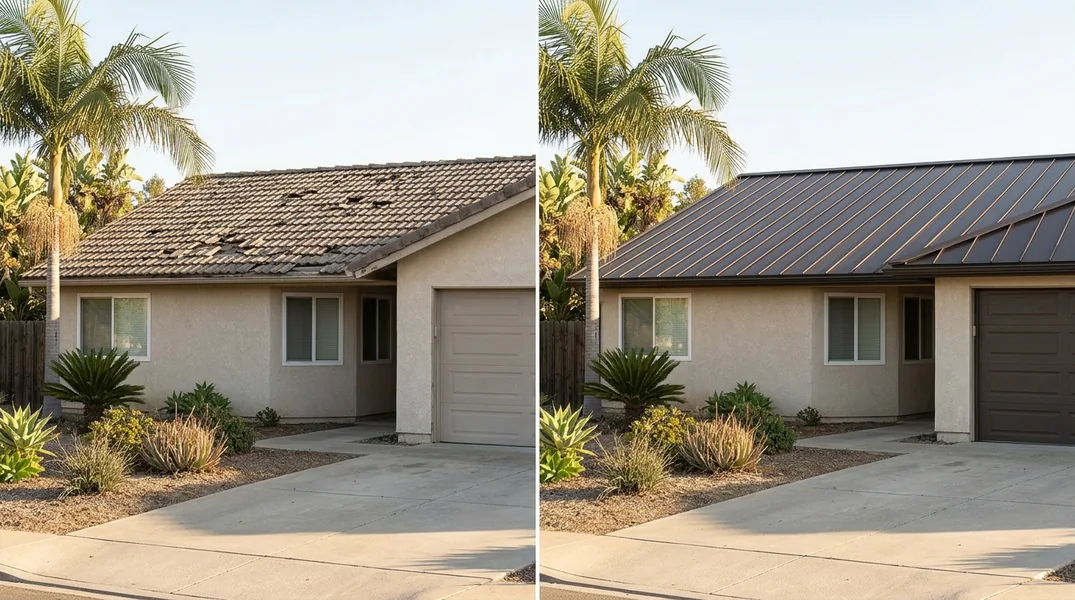
Why Salt Air Is Hard on Roofs in Oceanside
Living near the coast means enjoying ocean breezes, moderate temperatures, and that unmistakable beach-town lifestyle. It also means your roof is under constant attack from salt air. In Oceanside, the marine layer rolls in most mornings, coating roofs with microscopic salt particles and moisture. Over time, that combination accelerates corrosion on metal surfaces, especially at fasteners, cut edges, and panel seams.
This is why not every metal roof is a smart choice for a beachside home. A standard steel panel that performs beautifully inland can start showing rust and chalky paint failure within a decade when installed a few miles from the surf. Homeowners in Carlsbad and other coastal communities face the same challenge. The good news is that modern metal roofing offers excellent corrosion resistance when you select the right material and installation method for the environment.
Galvalume vs Aluminum Roof: Which Handles Coastal Conditions Better?
Two of the most common metal roofing materials are galvalume (steel coated with an aluminum-zinc alloy) and aluminum. Galvalume is a strong, economical choice for inland areas, and it performs well in many applications. However, in a salt-heavy coastal environment, the zinc in the coating can be attacked by chloride ions, which are abundant in sea air. Over time, this can lead to edge rust and premature coating degradation, particularly on cut edges that are not perfectly sealed.
Aluminum metal roof coastal installations are generally the superior choice for homes within a few miles of the ocean. Aluminum naturally forms a thin, protective oxide layer when exposed to air, and that layer resists salt corrosion far better than steel-based products. It is also lighter, which can reduce stress on older roof structures. For homeowners comparing galvalume vs aluminum roof options in Vista or closer to the coast, aluminum is usually the safer long-term investment. A professional Metal Roof Installation contractor can help you weigh the tradeoffs based on your exact distance from the water and your budget.
How Metal Roof Corrosion Actually Happens Near the Beach
Metal roof corrosion is not just about rust. It is an electrochemical process driven by moisture, oxygen, and dissolved salts. In coastal Oceanside, the daily marine layer provides plenty of moisture, and salt deposits from ocean spray act as an electrolyte that speeds up the reaction. Corrosion tends to start at the most vulnerable points: panel edges, fastener heads, scratches from installation, and areas where debris or sand accumulates and holds moisture against the metal.
Paint systems and protective coatings are your roof's first line of defense. High-quality factory-applied finishes, such as Kynar 500 or Hylar coatings, are designed to resist chalking, fading, and corrosion. But even the best coating can fail if the metal is cut or damaged during installation and those edges are not treated properly. That is why proper detailing matters as much as the material itself. A contractor who understands metal roof corrosion will specify sealed cut edges, stainless steel or coated fasteners, and installation practices that minimize surface damage. For a Metal Roof Replacement, this attention to detail can add years to the life of your roof.
Best Metal Roofing Systems for Coastal Oceanside Homes
For coastal properties, Standing Seam Metal Roofing is often the gold standard. Standing seam panels have raised seams and hidden fasteners, which means there are fewer penetrations where water and salt can collect. The panels are typically made of aluminum or coated steel, and the concealed fastener design reduces the risk of corrosion at screw heads. This system also sheds debris well and looks clean and modern on beach homes.
If your home already has asphalt shingles and you want to avoid a full tear-off, a Metal Roof Over Shingles (Retrofit) can be a practical option. However, coastal homeowners should be careful: installing metal over existing shingles can trap moisture and accelerate corrosion if ventilation is not handled correctly. A professional installer will assess your roof deck, attic ventilation, and flashing details before recommending a retrofit. In many coastal cases, a full tear-off and new underlayment provide a more reliable long-term result.
Metal Roof Installation Near Me: When to Call a Pro in Oceanside
If you are searching for metal roof installation near me in Oceanside, you are probably noticing signs that your current roof is struggling: rust spots, peeling paint, loose fasteners, or granules in the gutters. Coastal roofs age differently than inland roofs, and a problem that looks minor on the surface can hide advanced corrosion underneath. Waiting too long can lead to leaks, structural damage, and higher repair bills.
A local contractor who specializes in coastal roofing will inspect your roof for salt-related wear, check the condition of flashings and fasteners, and recommend a material that matches your exposure level. They should also explain the difference between galvalume and aluminum for your specific location and provide clear pricing before work begins. If you are ready to protect your home from salt air, call Oceanside Metal Roofing at (442) 333-2316 or request a free estimate. Serving San Marcos and the surrounding area, the team can help you choose a corrosion-resistant metal roof built for the coast.
Looking for a professional metal roofing contractor in Oceanside? Oceanside Metal Roofing responds fast for all your metal roofing needs.
Get a Free QuoteOur services: Metal Roof Installation · Standing Seam Metal Roofing · Metal Roof Replacement